

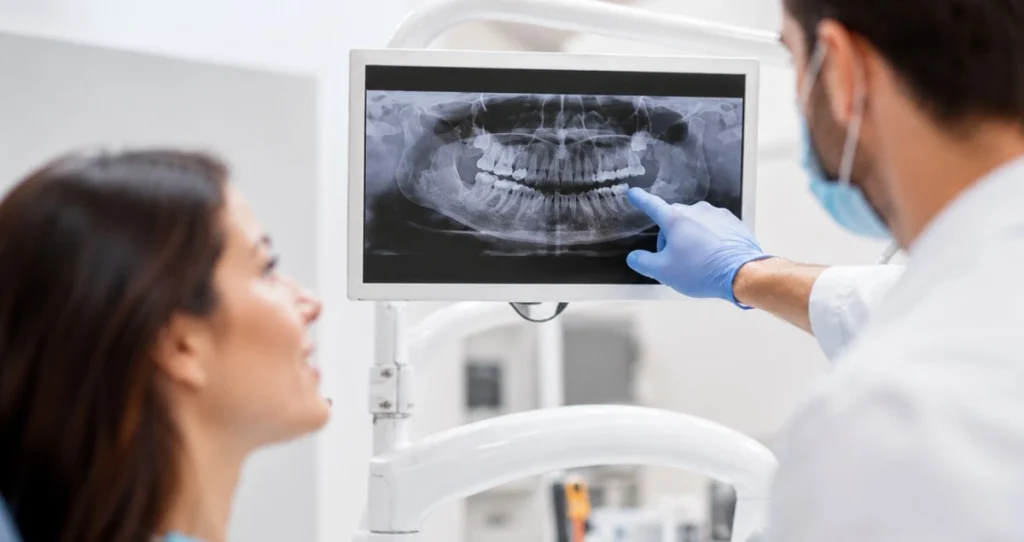
Dental X-rays are a key part of modern dental care. Dentists can check your teeth and gums by looking, but some issues start below the surface and are not visible. X-rays help show what is happening under the gums, between teeth, and in the jawbone.
Even though X-rays are important, many people ask: “Are dental X-rays safe?” It’s common to have questions about safety, how often X-rays are needed, and possible health risks, especially for parents and pregnant women.
For most people, the answer is yes. Modern dental X-rays use very low amounts of radiation and follow strict safety rules. New digital technology has also made exposure much lower than it used to be.
In this blog, we’ll cover everything you need to know about dental X-rays, including their safety, radiation levels, benefits, and how often you may need them.
What Are Dental X-Rays?
Dental X-rays are pictures that help dentists see parts of your mouth they can’t check just by looking. They use a small amount of radiation to show details of your teeth, roots, jawbone, and nearby areas.
These X-ray images help dentists find problems early, often before you notice any symptoms. Finding issues sooner means treatment can be simpler and can help prevent bigger problems later.
Common Dental Issues Detected by X-Rays
Dental X-rays help identify a variety of oral health concerns, including:
- Cavities between teeth.
- Bone loss caused by gum disease.
- Tooth infections and abscesses.
- Impacted wisdom teeth.
- Jawbone abnormalities.
- Tooth development issues in children.
- Hidden cracks or fractures.
Without X-rays, many of these problems might not be found until they start to hurt or become harder to fix.
Are Dental X-Rays Safe?
Understanding Radiation Exposure
One of the biggest concerns patients have involves dental X-ray radiation. However, the amount of radiation used in modern dental imaging is extremely low.
To put it into perspective, people are exposed to natural background radiation every day from the environment, including sunlight, soil, and even the air we breathe.
A typical digital dental X-ray exposes patients to only a fraction of the radiation they receive from natural sources in a day.
Because the exposure is so low, dental X-rays are considered safe for most people.
Safety Standards in Modern Dentistry
Dental clinics follow strict rules to keep patients safe from radiation. They regularly check and maintain their equipment to ensure it works properly and uses the lowest dose needed.
Dentists and dental professionals receive extensive training in imaging procedures and radiation protection. Every X-ray is taken only when clinically necessary and with patient safety as the top priority.
Why the Benefits Often Outweigh the Risks
Although it’s best to keep radiation exposure as low as possible, the benefits of dental X-rays usually outweigh the risks. Dental X-rays help detect problems before they worsen.
For example, a small cavity found early might need a filling, but if it goes unnoticed, it could lead to a root canal or even the loss of the tooth.
Finding issues early can also help prevent infections, bone loss, and other problems that could harm your oral health.
How Digital Dental X-Rays Improve Safety
Reduced Radiation Exposure
Modern digital X-ray systems have changed dental imaging for the better. Compared to old film X-rays, digital ones use much less radiation.
This means patients get the information they need with less radiation than ever before.
Faster and More Accurate Imaging
Digital X-ray images appear on a computer right away. Dentists can check the results immediately and discuss them with you during your visit.
Better image quality also helps dentists make more accurate diagnoses and plan your treatment more effectively.
Environmentally Friendly Technology
Digital X-rays do not need the chemicals used to develop film in older systems.
This makes digital imaging more environmentally friendly while still delivering reliable diagnostic results.
Are Dental X-Rays Safe for Children?
Parents often ask if dental X-rays are safe for children. In many cases, X-rays are an important part of preventing dental problems in kids.
Why Children May Need Dental X-Rays
Children may need X-rays to:
- Monitor tooth eruption and development.
- Detect cavities between teeth.
- Evaluate orthodontic concerns.
- Identify impacted or missing teeth.
Finding problems early lets dentists treat them before they can affect your child’s dental development.
Extra Safety Precautions for Kids
Dentists are extra careful when taking X-rays of children. They limit exposure based on the child’s age, dental history, and needs.
Protective lead aprons and other safety steps help keep the procedure as safe as possible.
Are Dental X-Rays Safe During Pregnancy?
Pregnancy often brings up extra questions about dental care. The good news is that modern dental X-rays are usually safe when needed and done with the right precautions.
Protective Measures Used During Pregnancy
If you need X-rays during pregnancy, dentists take special care to keep exposure as low as possible. They use protective shields, modern digital equipment, and careful imaging techniques to keep radiation very low.
Importance of Informing Your Dentist
Patients should always inform their dental team if they are pregnant or think they may be pregnant.
This information allows the dentist to determine the most appropriate timing and imaging approach based on individual circumstances.
How Often Should You Get Dental X-Rays?
Factors That Affect Frequency
There is no single answer that applies to everyone. The frequency of dental X-rays depends on several factors, including:
- Age
- Oral health history
- Risk of tooth decay
- Presence of gum disease
- Existing dental restorations
- Symptoms or concerns requiring evaluation
Patients with ongoing dental issues may need imaging more often than those with a long history of good oral health.
Personalized Recommendations From Dentists
Dentists look at each person’s unique situation before recommending X-rays.
Instead of using a set schedule, dentists base X-ray decisions on your needs and risk factors. This way, you get the care you need without extra exposure.
Safety Measures Dentists Use During Dental X-Rays
Dental clinics use multiple safety protocols to protect patients during imaging procedures, including:
- Lead aprons and thyroid collars when appropriate.
- Modern low-radiation digital equipment.
- Precise image targeting techniques.
- Routine equipment maintenance and testing.
- Limiting imaging to clinically necessary situations.
These measures work together to keep radiation exposure as low as reasonably achievable.
Common Myths About Dental X-Rays
Myth 1: Dental X-Rays Are Dangerous
A common myth is that dental X-rays expose you to dangerous amounts of radiation. In fact, modern dental X-rays use very low doses and follow strict safety rules to protect you.
Myth 2: You Should Avoid X-Rays Completely
Some patients believe avoiding X-rays altogether is the safest option. But if you skip recommended X-rays, hidden problems can worsen without being detected.
Untreated cavities, infections, or bone loss can mean more complicated dental work later.
Myth 3: All Dental X-Rays Use High Radiation
Many people think all dental X-rays use the same amount of radiation. But today’s digital X-rays use much less radiation than old film systems, making them safer and more efficient.
Why Choose Gillmore Medical Dental for Safe Dental Imaging
At Gillmore Medical Dental, your safety and comfort come first. We use advanced digital dental X-ray technology to provide accurate diagnoses while minimizing radiation exposure.
Our experienced dental team follows strict safety protocols and recommends X-rays only when they are clinically necessary. We also take the time to explain every procedure, answer your questions, and ensure you feel informed and confident about your care.
If you’re looking for safe, modern dental imaging and comprehensive dental care in Maple, Ontario, you can trust Gillmore Medical Dental to deliver personalized treatment focused on your long-term oral health.
Conclusion
Dental X-rays are still one of the best tools for preventing and diagnosing dental problems. With modern technology and safety measures, they are a safe and effective way to identify issues before they become serious.
Finding problems early often means easier treatments, lower costs, and better long-term results for your oral health.
If you have questions about dental X-rays, talk to your dentist to learn more about the benefits and safety steps.
If you want professional dental treatments in Maple, Ontario, book a visit at Gillmore Medical Dental and let our experienced team help keep your smile healthy.
People Also Ask
How much radiation is in a dental X-ray?
A digital dental X-ray uses a very small amount of radiation, often comparable to just a few hours of natural background radiation that people are exposed to daily.
Can pregnant women get dental X-rays?
Yes. When necessary, dental X-rays can be performed safely during pregnancy using modern equipment and appropriate protective measures.
Always inform your dentist if you are pregnant or think you may be pregnant.
How many dental X-rays are safe in a month?
The number varies based on your oral health needs. Dentists recommend X-rays only when clinically necessary and tailor imaging schedules to each patient’s situation.
Should I refuse dental X-rays?
In most cases, refusing recommended X-rays may prevent your dentist from detecting hidden problems such as cavities, infections, or bone loss.
It’s best to discuss any concerns with your dentist before making a decision.
How risky are dental X-rays?
The risks associated with modern dental X-rays are extremely low. Advances in digital technology and strict safety protocols have made dental imaging one of the safest diagnostic procedures available in dentistry.