

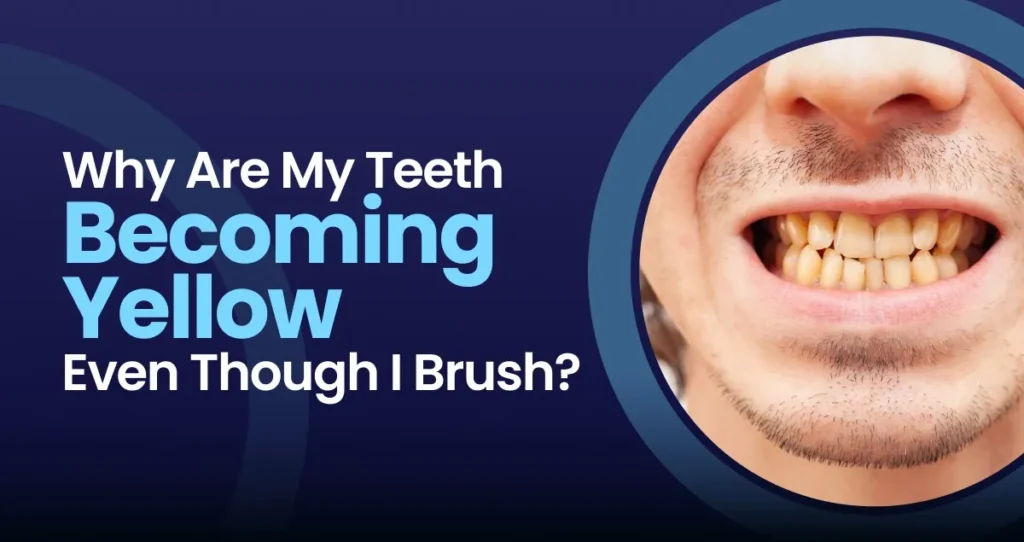
Brushing your teeth twice a day is one of the best habits you can have for maintaining good oral health. However, many people are surprised when they notice their teeth becoming yellow despite following a regular brushing routine.
If you’ve been asking yourself, why are my teeth becoming yellow? You’re certainly not alone. Tooth discoloration can happen for many reasons, such as aging, diet, smoking, medications, and certain dental conditions.
In many cases, brushing alone isn’t enough to remove stains that develop beneath the surface of the enamel or hardened tartar that forms over time.
According to the American Dental Association (ADA), maintaining good oral hygiene and visiting your dentist regularly are essential for keeping your teeth healthy and minimizing surface stains.
In this guide, we’ll explain the most common causes of yellow teeth, how to prevent further staining, the professional dental treatments available today, and when it’s time to visit your dentist.
Why Are My Teeth Becoming Yellow?
There isn’t just one reason for yellow teeth. Usually, several factors work together to cause tooth discolouration.
1. Natural Aging
Our tooth enamel gradually becomes thinner through years of chewing and daily wear.
Because enamel is slightly translucent, thinning enamel allows the naturally yellow dentin beneath it to become more visible.
2. Poor Brushing or Flossing Technique
Brushing every day is important, but how you brush matters just as much as how often you do it.
Plaque often collects along the gumline and between teeth where toothbrush bristles may not reach effectively. If plaque isn’t removed regularly, it can harden into tartar, creating a yellow or brown appearance that brushing alone can’t remove.
Flossing every day and using the right brushing technique can help prevent this buildup.
3. Food and Drinks That Stain Teeth
Certain foods and beverages contain pigments that gradually stain tooth enamel.
Common staining culprits include:
- Coffee
- Tea
- Red wine
- Cola
- Dark berries
- Tomato-based sauces
- Soy sauce
- Balsamic vinegar
These stains build up slowly and can become more obvious over time, especially if you miss regular professional cleanings.
4. Smoking and Tobacco Use
Smoking is one of the leading causes of persistent tooth staining.
Nicotine itself has no colour, but it turns yellow when it meets oxygen. Tar from tobacco also sticks to your teeth, causing tough brown or yellow stains that get harder to remove over time.
Long-term tobacco use can also increase the risk of gum disease and oral cancer.
5. Certain Medications
Some medications may contribute to tooth discolouration.
Examples include:
- Certain antibiotics
- Some antihistamines
- Blood pressure medications
- Chemotherapy treatments
- Medications that reduce saliva production
If you see changes in your tooth colour after starting a new medication, talk to your dentist about it.
6. Genetics
Sometimes, yellow teeth have nothing to do with how well you care for them.
Some people naturally inherit thinner enamel or slightly darker dentin, making their teeth appear more yellow than others even when they practice excellent oral care.
7. Poor Diet
Frequent consumption of sugary foods and acidic beverages can contribute to enamel wear.
As enamel gradually erodes, the underlying dentin becomes more visible, making teeth appear increasingly yellow.
Eating a balanced diet with plenty of calcium and other nutrients helps keep your teeth and enamel strong.
8. Medical Conditions
Certain health conditions can also affect tooth colour.
Examples include:
- Enamel development disorders
- Chronic dry mouth
- Acid reflux
- Medical conditions affecting saliva production
Saliva helps protect your enamel and washes away acids. If you have less saliva, you may be more likely to get stains and enamel erosion.
Can Yellow Teeth Be a Dental Problem Sign?
Mild tooth discoloration is usually just a cosmetic issue, but sometimes yellow teeth can be a sign of a dental problem.
Possible causes include:
- Tooth decay
- Plaque buildup
- Hardened tartar
- Gum disease
- Enamel erosion
If your tooth colour changes suddenly, only one tooth is affected, or you have pain or sensitivity, you should see your dentist as soon as possible.
Your dentist can determine whether the discoloration is simply staining or a sign of a condition requiring treatment.
How to Prevent Yellow Teeth
It’s usually easier to prevent stains than to get rid of them later.
Simple habits that help keep your smile brighter include:
- Brush twice a day using fluoride toothpaste.
- Floss every day.
- Drink water after meals and staining beverages.
- Limit coffee, tea, red wine, and sugary soft drinks.
- Eat a balanced diet that supports enamel health.
- Avoid smoking and tobacco products.
- Schedule regular professional dental cleanings.
These habits help your teeth look better and also keep your mouth healthier in the long run.
Professional Treatments for Yellow Teeth
When brushing and whitening toothpaste aren’t enough, your dentist may recommend one of several professional treatments for yellow teeth.
1. Professional Teeth Whitening
This whitening treatment uses carefully formulated whitening agents to safely brighten teeth under dental supervision.
Professional whitening usually gives better and more reliable results than store-bought products, and it’s less likely to irritate your gums.
2. Dental Cleaning and Scaling
Sometimes, teeth look yellow just because plaque and tartar have built up on them.
Professional cleaning removes these deposits, helping restore the natural appearance of your teeth while improving gum health.
3. Veneers
If you have deep stains, worn enamel, or other cosmetic issues that whitening can’t fix, porcelain veneers might be a good option.
Veneers cover the front surface of teeth to create a brighter, more uniform smile.
4. Dental Bonding
Dental bonding uses a tooth-coloured resin to improve the appearance of discolored or damaged teeth.
Dentists may suggest this if only one or a few teeth are stained, or if you want a small cosmetic change.
Your dentist will recommend the most appropriate Professional Treatments for Yellow Teeth based on the underlying cause of your discolouration.
When Should You See a Dentist?
It’s a good idea to schedule a dental examination if you notice:
- Sudden tooth discoloration
- Persistent yellow teeth despite good oral hygiene
- Tooth sensitivity
- Pain or swelling
- Visible tartar buildup
- Dark spots or areas that continue to worsen
Seeing your dentist early helps them find the cause and treat it before it turns into a bigger problem.
Conclusion
If you’ve been wondering why your teeth are becoming yellow, remember that brushing alone isn’t always enough to prevent tooth discoloration. Natural aging, diet, smoking, medications, genetics, and underlying dental conditions can all affect the colour of your teeth.
The good news is that you can manage or treat many causes of yellow teeth with good oral care, prevention, and help from your dentist when needed.
If you’ve noticed your teeth staying yellow or affecting your smile, schedule an appointment at Gillmore Medical Dental. Our team will find out what’s causing the discoloration and suggest the best treatment to help you keep your smile healthy and confident.
Frequently Asked Questions
Why are my teeth becoming yellow even though I brush every day?
Brushing removes plaque and food debris, but it cannot always prevent staining caused by aging, genetics, certain foods and drinks, smoking, medications, or enamel erosion.
Can yellow teeth become white again?
In many cases, yes. Professional dental cleanings, whitening treatments, and certain cosmetic procedures can improve the appearance of yellow teeth, depending on the underlying cause.
Does brushing harder remove yellow stains?
No. Brushing harder does not remove deep stains and may actually wear away enamel, making teeth appear even more yellow over time.
Is professional teeth whitening safe?
When performed or supervised by a dental professional, teeth whitening is considered a safe and effective cosmetic treatment for most healthy patients.
How long do teeth whitening results last?
Results vary depending on diet, smoking habits, and oral hygiene. Many patients enjoy brighter teeth for several months to a few years with proper maintenance.
Can smoking permanently stain teeth?
Long-term smoking can create stubborn stains that may not respond to regular brushing. Professional cleaning or cosmetic treatment may be needed to improve their appearance.
How often should I get a professional dental cleaning?
Most patients benefit from a professional dental cleaning every six months, although your dentist may recommend more frequent visits depending on your oral health needs.