

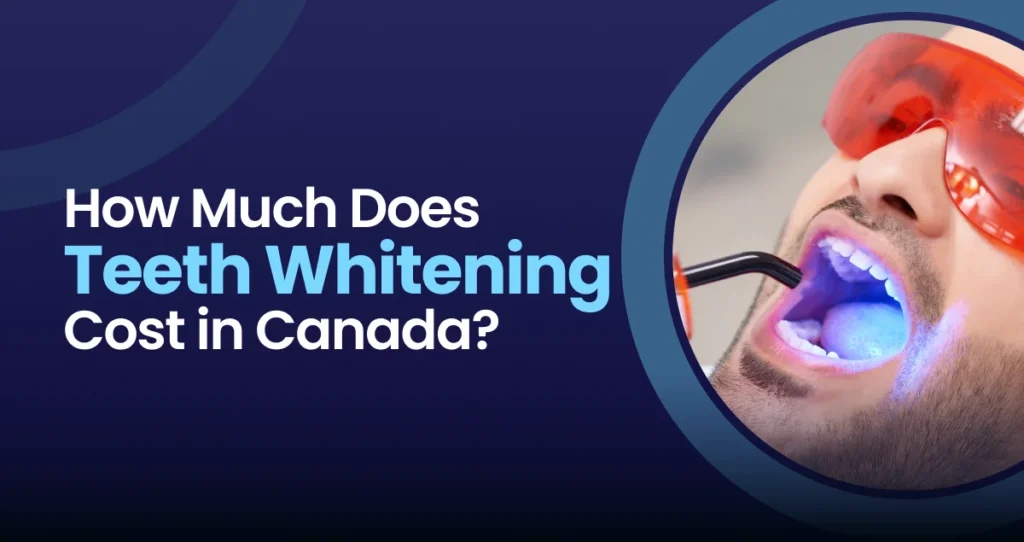
A brighter smile can make a noticeable difference in how you feel about your appearance. That is one reason professional teeth whitening remains a popular cosmetic dental treatment in Canada.
But before booking an appointment, many patients ask the same question: how much does teeth whitening cost?
The answer depends on the type of whitening you choose, where you receive treatment, how much discoloration you have, and whether you need more than one appointment.
However, teeth whitening costs in Canada can range from $55 to more than $1,000 CAD, depending on the treatment method, location, and number of appointments.
In this guide, we’ll cover average teeth whitening cost by treatment type, key cost factors, whether insurance usually covers whitening, who is a good candidate, how to choose the right option, and why professional teeth whitening treatment may be worth considering.
How Much Does Teeth Whitening Cost in Canada?
There is no single price for teeth whitening treatment for every patient. Different methods have different costs, and prices can also vary between provinces and dental practices.
Average Teeth Whitening Cost by Treatment Type
| Whitening Method | Average Cost |
| Over-the-counter products | $9-$220 CAD |
| Dentist-provided take-home trays | $140-$683 CAD |
| Enamel microabrasion | $55-$595 CAD |
| Laser teeth whitening | $55-$628+ CAD |
These numbers should not be treated as a quote for treatment at Gillmore Medical Dental. Your dentist can provide a more accurate estimate after assessing your teeth and recommending the appropriate approach.
What Factors Affect the Cost of Teeth Whitening in Canada?
Several things can influence your final treatment cost. Understanding them can make it easier to compare options without focusing only on the advertised starting price.
Treatment Type
This is one of the biggest differences.
A whitening toothpaste or strip will generally cost much less upfront than professional treatment. Dentist-provided take-home trays sit somewhere between many retail products and certain in-office procedures.
The treatment you need should depend on your teeth, the type of discoloration, and your desired outcome rather than price alone.
Clinic Location
Prices can differ significantly between provinces and cities.
That is why an advertised price from one city should not automatically be assumed to apply elsewhere.
Stain Severity and Number of Sessions
The amount and type of discoloration can also affect treatment requirements.
Some patients have relatively straightforward surface staining. Others may have deeper or more complex discoloration that does not respond to whitening in the same way.
The Canadian Dental Association recommends consulting a dentist to determine the cause of discoloration and whether whitening is likely to produce the desired result.
Dentist Experience and Treatment Planning
Professional whitening involves more than simply applying whitening gel.
A dentist can assess your oral health, determine whether whitening is appropriate, identify existing dental work, and discuss realistic results before treatment.
This is particularly important if you have fillings, crowns, root canal-treated teeth, or significant discoloration because dental restorations do not whiten in the same way as natural teeth.
Extra Dental Procedures
Sometimes whitening should not be the first step.
A patient may need a dental examination or cleaning before whitening. If cavities, gum disease, heavy tartar, or another oral health problem is present, that issue may need to be addressed first.
Those additional services can affect your overall dental bill.
Does Dental Insurance Cover Teeth Whitening?
In most cases, dental insurance does not cover teeth whitening because it is considered an elective cosmetic procedure rather than a medically necessary treatment.
However, coverage varies between insurance plans. If you have dental benefits, review your policy or contact your insurance provider before assuming that a specific whitening service is covered.
It’s also a good idea to ask your dental clinic what is included in the quoted price and whether additional costs, such as an examination or professional cleaning, are billed separately.
How Long Do Teeth Whitening Results Last?
Whitening is not permanent.
How long the results last depends on factors such as your diet, oral hygiene, tobacco use, and the whitening method used.
Whitening effects can last up to two years, depending on lifestyle factors such as smoking and consumption of staining foods and beverages. Professional laser whitening results may last up to 3 years with appropriate care.
Because results vary from person to person and depend on different factors, these timeframes should be viewed as general expectations rather than guarantees.
Coffee, tea, red wine, cola, and tobacco can contribute to new staining. Regular brushing and flossing, routine dental cleanings, and limiting staining foods and beverages can help maintain a brighter smile for longer.
Are There Any Additional Costs to Consider?
The advertised whitening price may not always represent the entire cost of your visit.
Depending on your situation, you may also need:
- An initial dental examination
- Professional dental cleaning
- Treatment for cavities
- Gum treatment
- Replacement or additional whitening trays
- Follow-up whitening sessions
- Treatment for underlying causes of discoloration
A consultation is particularly useful if your teeth are sensitive or if you are unsure why they have become darker.
Who Is a Good Candidate for Teeth Whitening?
Teeth whitening may be suitable for adults with healthy teeth and gums who want to reduce certain types of discoloration and improve the appearance of their smile.
It can be particularly helpful for people with stains caused by:
- Coffee and tea
- Tobacco use
- Certain foods and beverages
- Aging
- Some types of surface discoloration
However, whitening does not work equally well on all types of stains. It’s important to identify the cause of discoloration before treatment, especially if you have fillings, crowns, root canal-treated teeth, or significant dark staining.
A dental professional can assess your teeth and recommend the most appropriate whitening option.
How to Choose the Right Teeth Whitening Treatment
There is no single best whitening option for everyone.
Want Faster Results?
Professional in-office whitening may be worth discussing with your dentist if you want a noticeable change in a shorter time.
Prefer Whitening at Home?
A dentist-provided take-home whitening system may be a better fit if you want a more gradual treatment approach with professional guidance.
Looking for the Lowest Upfront Cost?
Over-the-counter products generally have the lowest starting price. However, the final result can vary, and they may not address deeper or more complex discoloration.
Have Existing Dental Work?
Talk to your dentist first. Crowns, fillings, veneers, and other restorations do not necessarily whiten along with natural teeth.
Why Choose Gillmore Medical Dental for Professional Teeth Whitening Services in Maple, Ontario
If you’re considering teeth whitening, the first step is understanding what is causing the discoloration and which treatment option is appropriate for your smile.
At Gillmore Medical Dental, patients can discuss their cosmetic dental goals with a dental professional and determine whether professional teeth whitening is suitable for them.
A consultation can help identify the type and cause of staining, set realistic expectations, review available treatment options, and explain the expected cost of treatment.
Rather than choosing a whitening treatment based solely on an advertised price, a personalized assessment can help you understand what is included in the cost and what results you can reasonably expect.
Conclusion
The cost of teeth whitening in Canada can vary considerably depending on the treatment method, the extent and type of staining, the number of sessions required, and whether additional dental care is needed.
While over-the-counter products may offer a lower upfront cost, professional whitening provides the benefit of a personalized assessment and treatment plan based on your oral health and cosmetic goals.
Before choosing a whitening treatment based solely on price, consider what is included in the cost, whether the option is suitable for your teeth, and what type of results you can realistically expect.
A dental professional can also help determine whether existing restorations, sensitivity, or underlying dental concerns could affect your treatment.
If you’re looking for professional teeth whitening in Maple, Ontario, Gillmore Medical Dental can help you explore your options and determine which approach is right for your smile.
Contact Gillmore Medical Dental today to schedule a teeth whitening appointment and take the next step toward a brighter, more confident smile.
Frequently Asked Questions
Does teeth whitening hurt?
Teeth whitening is generally well tolerated, but some people may experience temporary tooth sensitivity or gum irritation. If you have sensitive teeth, tell your dentist before treatment so they can recommend an appropriate approach.
Are there side effects from professional teeth whitening?
Temporary tooth sensitivity is one of the most common side effects. Some people may also experience mild gum or soft-tissue irritation.
Following your dentist’s instructions can help minimize these effects.
Why are my teeth still yellow after whitening?
Whitening does not work equally well on every type of discoloration. Aging, natural tooth colour, certain medications, trauma, and dental restorations can affect the results. A dentist can determine the cause and recommend the most suitable option.
Can I whiten my teeth if I have sensitive teeth?
Possibly. However, whitening can temporarily increase tooth sensitivity. Talk to your dentist first so they can assess the cause of sensitivity and determine whether whitening is appropriate for you.
Can you whiten teeth with gum disease?
Active gum disease should generally be addressed before cosmetic whitening. If your gums are bleeding, swollen, or inflamed, your dentist may recommend treating the underlying problem first.
Does teeth whitening damage tooth enamel?
When used correctly and according to professional or product instructions, teeth whitening is generally considered safe. However, excessive or improper use can increase the risk of sensitivity and irritation.
A dentist can help you choose an appropriate treatment and frequency.