

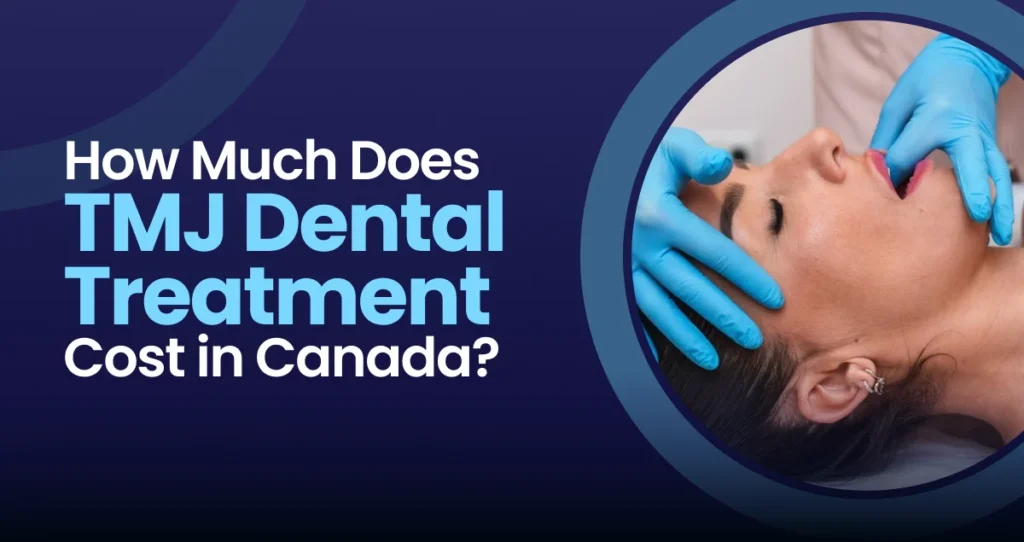
Jaw pain, clicking sounds, headaches, and discomfort while chewing can make everyday activities difficult. These symptoms may be linked to temporomandibular disorders (TMDs), which affect the jaw joints and the muscles that move them.
Depending on the cause, treatment may involve a dental assessment, a custom oral appliance, or care from other healthcare professionals.
If you are researching the TMJ dental treatment cost in Canada, one important thing to understand is that there is no single price for every patient. Your total may depend on your symptoms, required tests, recommended treatment, and the number of follow-up appointments you need.
At Gillmore Medical Dental, patients can seek professional assessment of TMJ-related dental concerns and discuss appropriate next steps.
In this guide, we will explain what dental TMJ disorders are, cover common symptoms, estimated costs, what is commonly included, and insurance considerations, and discuss why you should choose Gillmore Medical Dental for TMJ dental services in Maple, Ontario, in 2027.
What Are Dental TMJ Disorders?
The temporomandibular joints are located on either side of your head, just in front of your ears. They connect your lower jaw to your skull and work with nearby muscles and ligaments to help you chew, speak, swallow, and yawn.
Temporomandibular disorders can affect the joints, muscles, or other tissues in this area. The Canadian Dental Association explains that these conditions may have several contributing factors, including jaw injuries, joint disease, muscle tension, and teeth grinding.
Common TMJ Dental Disorder Symptoms
Symptoms vary from person to person. Common symptoms for this disorder include:
- Jaw pain or tenderness, especially when chewing.
- Clicking, popping, or grinding sounds when opening the mouth.
- Difficulty opening or closing the mouth fully.
- Facial discomfort or soreness around the temples.
- Headaches that may be associated with jaw tension.
- Ear-related discomfort or pain near the jaw joint.
- Pain while chewing or speaking.
- Jaw stiffness or episodes of locking.
These symptoms do not automatically mean you have a TMJ disorder. Other dental and medical conditions can cause similar discomfort. If symptoms persist, interfere with eating, or limit jaw movement, arrange an assessment with a dental or healthcare professional.
How Much Does TMJ Dental Treatment Cost in Canada in 2027?
| Treatments | Estimated Costs |
| TMJ Consultation and Dental Assessment | $150-$350 CAD |
| Diagnostic Imaging | $150-$350 CAD |
| Custom TMJ Night Guard or Oral Splint | $400-$800 CAD |
| Occlusal or Bite Adjustment | $500-$1,200+ CAD |
| Follow-up TMJ Dental Care | Varies; often included or quoted separately depending on the treatment plan. |
These figures are broad local estimates and are not a standardized fee schedule for Canadian dental clinics.
For a more accurate budget, ask the clinic to provide separate costs for the consultation, imaging, appliance, adjustments, and follow-up visits. This can help you understand the expected total before treatment begins.
What is Commonly Included in a TMJ Dental Treatment?
1. TMJ Consultation and Dental Assessment
Treatment generally begins with an assessment of your symptoms, jaw movement, dental health, and medical history. Your dentist may examine how your teeth meet, look for signs of grinding, and ask when your discomfort occurs.
The assessment helps determine whether the symptoms may be related to a dental concern or whether another professional should be involved. The consultation fee may be separate from any recommended treatment.
2. Diagnostic Imaging for TMJ Evaluation
Imaging may be recommended when your dentist needs more information about your teeth, jaw, or surrounding structures. The type of imaging depends on the suspected problem.
Not every patient requires advanced imaging. Your dentist can explain why a particular test may be useful and whether its cost is included in your treatment estimate.
3. Custom TMJ Night Guards and Oral Appliances
A custom dental appliance, often called an occlusal splint, fits over the teeth and may help reduce the effects of clenching or grinding. Depending on the diagnosis, it may also be used as part of a plan to manage jaw muscle tension.
The cost depends on the appliance’s design, materials, and fitting requirements. Some appliances also need adjustments after delivery.
4. Occlusal or Bite Adjustments
Bite-related procedures should only be considered when an assessment identifies a clear clinical reason. They are not necessary for every TMJ disorder.
Before agreeing to any procedure that alters the surface of the tooth or the bite, ask your dentist to explain its purpose, the benefits you can expect, the available alternatives, and the risks. Irreversible bite adjustments should not be regarded as a standard solution for jaw pain.
5. Follow-Up and Ongoing Dental TMJ Care
The act of receiving the appliance doesn’t have to be the end of the process; your dentist might wish to examine how it fits, go over your symptoms, and make any necessary adjustments.
Follow-up costs will vary based on the treatment plan and the clinic’s fee schedule. Before moving forward, you should find out how many revisions are included and whether the quote includes appliance adjustments to the appliance.
What Factors Affect TMJ Dental Treatment Cost?
Several factors can influence the final cost.
Treatment Type
An examination and advice may cost less than a treatment plan that includes a custom appliance, advanced imaging, or several procedures. The services recommended for your condition determine the main cost components.
Severity and Complexity of the Condition
Mild symptoms might call for a different method than persistent pain, limited jaw movement, or a more complicated joint problem, and more complicated cases could involve further assessment or the need for a specialist’s input.
Diagnostic Requirements
Your dentist might be able to deal with certain issues by carrying out a clinical examination, but in some instances further action such as imaging or a referral will be necessary, which will increase the total cost.
Custom Dental Appliances
The price of the appliance can be influenced by the material it is made from, its design and the way it is fitted.
Find out if the figure given covers the cost of the first fitting as well as any adjustments.
Number of Appointments
The total cost may depend on the number of appointments you need, including the initial assessment, appliance fitting, follow-up visits, and any additional care required if your symptoms change.
Dentist Experience
The provider’s experience and training in managing jaw-related conditions may affect the cost. If a specialist assessment is recommended, ask whether it comes with a separate consultation fee.
Dental Practice Location
Fees can differ between cities, neighborhoods, and individual clinics. For this reason, published prices should be used as budgeting guides rather than guaranteed rates.
Does Dental Insurance Cover TMJ Treatment in Canada?
The amount of coverage you get will depend on the dental insurance plan you have. In some cases, the plan may pay part of the cost of eligible examinations, diagnostic procedures, or dental appliances, while in others it may impose restrictions, annual maximums, or exclusions.
Before you start treatment, check your policy and ask your insurance company if the services in question are eligible for benefits. You should not assume that a custom TMJ appliance is covered just because a dentist has prescribed it.
You can also ask the dental office for an itemized treatment estimate and any available insurance documentation. Confirm coverage directly with your insurance provider, including the amount payable, any pre-approval requirements, and your expected out-of-pocket expense.
Is TMJ Treatment Only Dental?
No. TMJ disorders can involve several structures and may require input from different healthcare professionals.
Dental care may include examining the teeth and jaw, assessing possible grinding or clenching, providing a suitable oral appliance, and arranging follow-up care. Depending on the symptoms, a dentist may also recommend assessment by a physician, physiotherapist, or specialist in orofacial pain.
Physiotherapy can be part of a broader TMJ care plan, but it is not itself a dental treatment. The appropriate combination depends on the suspected cause and the patient’s needs.
Many cases can initially be managed with conservative, non-surgical approaches. The Canadian Dental Association’s TMJ information notes that many patients improve without surgery. Surgical treatment is generally considered only in selected cases when other approaches have not worked, or the joint problem warrants it.
Why Choose Gillmore Medical Dental for TMJ Dental Services in Maple, Ontario?
Jaw pain, clicking, stiffness, or discomfort while chewing can have several possible causes, making a proper assessment an important first step.
Gillmore Medical Dental provides dental care in Maple, Ontario, where patients can discuss their symptoms and concerns with the dental team.
When considering TMJ Dental Services in Maple, Ontario, it is important to understand what may be causing your symptoms, which treatment options may be appropriate, and what you can expect from the recommended care.
At Gillmore Medical Dental, you can discuss your concerns, ask questions about your treatment options, and receive information about the expected costs.
If your symptoms require care beyond general dentistry, the team can also discuss whether a referral to another healthcare professional may be appropriate. This helps ensure that your care is based on your individual needs rather than a one-size-fits-all approach.
Wrap Up
The cost of TMJ dental treatment in Canada can vary depending on your symptoms, the type of assessment required, diagnostic tests, recommended treatment, and the number of follow-up appointments.
Published estimates can help you plan your budget, but your actual cost will depend on your individual treatment needs and your dental clinic’s fees.
If you are experiencing ongoing jaw pain, clicking, stiffness, headaches, or discomfort while chewing, a professional assessment can help determine the appropriate next steps. Gillmore Medical Dental provides TMJ dental services in Maple, Ontario, with care based on your symptoms and individual needs.
Ready to discuss your TMJ concerns? Schedule a TMJ dental treatment appointment at Gillmore Medical Dental in Maple, Ontario, to learn more about your treatment options and expected costs.
FAQs
What should I ask my dentist before starting TMJ treatment?
Ask what may be causing your symptoms, which treatment options are appropriate, and why a specific procedure or appliance is recommended.
You should also ask for an itemized estimate, whether imaging is needed, what the appliance includes, how many follow-up visits you may need, and whether alternatives are available.
Will I need follow-up appointments after receiving a TMJ dental appliance?
You may need follow-up appointments to check the appliance’s fit, assess your symptoms, and make adjustments if necessary. The number of visits varies, so ask your dentist about the expected schedule and any additional fees before treatment begins.
Can dental TMJ treatment be done without surgery?
Yes. Many patients begin with conservative, non-surgical care, which may include a custom oral appliance, self-care measures, or referrals for other treatments. Surgery is generally considered only in selected cases.