

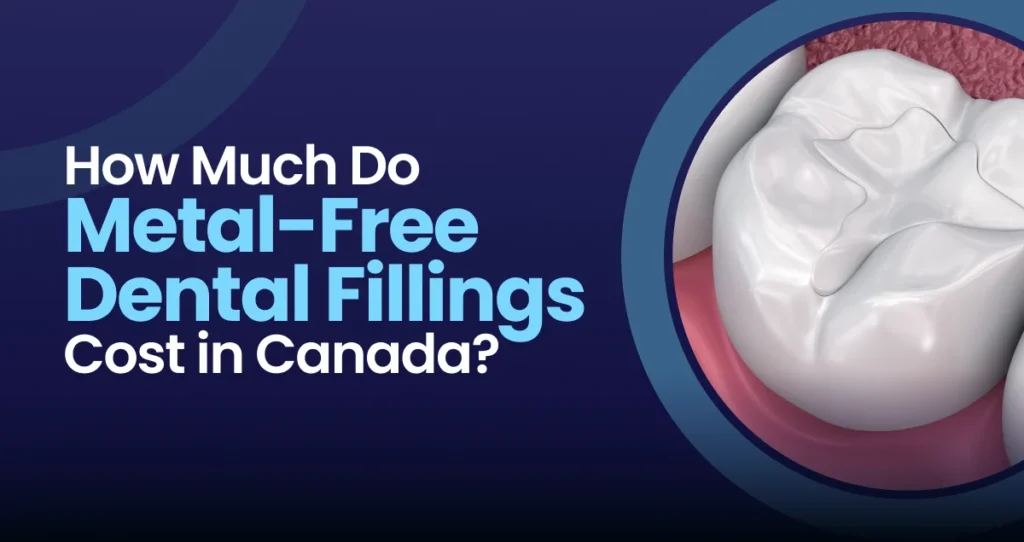
A dental filling repairs a tooth after decay has damaged its structure. Today, patients have several filling materials to choose from, including tooth-coloured composite resin, porcelain, glass-ionomer materials, and traditional amalgam.
Metal-free dental fillings are particularly popular with patients who want their restorations to blend with their natural teeth. Composite resin, for example, can be matched to the colour of the surrounding tooth, making the filling much less noticeable than a silver-coloured amalgam restoration.
But before starting treatment, many patients commonly ask: how much do metal-free dental fillings cost in Canada?
No single price applies to every filling. The final fee depends on the material selected, the number of tooth surfaces involved, the location and size of the cavity, and any additional treatment required.
In this guide, we’ll look at average metal-free dental fillings cost in 2027, common materials, what affects the cost of metal-free fillings, what’s included, insurance considerations, and why choose Gillmore Medical Dental for metal-free dental filling services in Maple, Ontario.
How Much Do Metal-Free Dental Fillings Cost in Canada?
The cost of metal-free dental fillings depends largely on the tooth-coloured material used and how much of the tooth needs restoration.
According to HelloDent’s guide, dental fillings in Canada generally cost between $379 and $726 CAD per filling, depending on factors such as the material, cavity size, and dental practice.
Average Metal-Free Dental Fillings Cost By Material Type
| Material Type | Price Range In Ontario |
| Composite resin | $198–$460 CAD |
| Porcelain | $460–$901 CAD |
| Glass-ionomer | $200 – $300+ CAD |
These figures are estimated ranges, not fixed prices. For a personalized estimate, your dentist will need to examine the tooth and determine the extent of decay or damage.
Common Metal-Free Dental Filling Materials
- Composite resin is one of the most common metal-free filling materials. Also known as a white or tooth-coloured filling, composite resin can be matched to the colour of natural teeth, making it a popular choice when appearance is important.
- Glass ionomer is another tooth-coloured, metal-free filling material. It can release fluoride and is generally used in areas that do not experience heavy biting forces.
- Porcelain or ceramic can also be used for certain dental restorations. However, these materials are generally used for indirect restorations, such as inlays and onlays, rather than standard direct fillings. They also involve a different treatment process from a conventional composite filling.
The appropriate material depends on factors such as the tooth being treated, the size and location of the cavity, your bite, oral health, and treatment goals.
What Factors Affect the Cost of Metal-Free Fillings?
Several factors can influence the final price.
1. Number of Tooth Surfaces Being Restored
A cavity may affect only one tooth surface or extend across multiple surfaces.
A larger restoration generally requires more material and more clinical work than a small filling.
2. Size and Depth of the Cavity
A small cavity is usually more straightforward to restore.
A deeper or larger cavity may require more preparation and careful assessment of the remaining tooth structure. If decay has reached or severely weakened the tooth, a filling may not be appropriate.
The Canadian Dental Association notes that untreated large cavities can continue to grow and may eventually cause pain or require more extensive treatment.
3. Location of the Tooth
The tooth being treated also matters.
Front teeth and back teeth experience different forces. Composite resin is widely used for tooth-coloured restorations, but the Canadian Dental Association notes that composite may not always be ideal for back teeth where strong chewing forces occur. Your dentist can determine whether it is appropriate for your specific tooth.
4. Filling Material Used
The material selected can affect the total cost.
Composite resin, glass ionomer, porcelain, and other restorative materials have different properties and treatment requirements. The type of filling can influence the final fee.
5. Complexity of the Procedure
A straightforward filling may be completed relatively quickly. A more complicated restoration may require additional preparation, isolation, imaging, or treatment.
The amount of time and clinical work involved can therefore affect the final cost.
6. Additional Examination or X-Rays
Your dentist may need X-rays to determine how far decay has progressed or to examine areas not visible during a visual exam.
The Canadian Dental Association explains that dentists may use X-rays to examine areas of concern more closely when assessing cavities.
7. Dentist’s Experience
Restorative treatment requires careful placement, shaping, bonding, polishing, and bite adjustment. Your dentist’s experience and the case’s complexity can therefore affect the overall treatment fee.
8. Dental Clinic Location
Dental fees can vary by city, province, and individual practice.
This is one of the key reasons online estimates should be treated as general guidance rather than a guaranteed price for treatment.
What Is Normally Included in the Cost of a Metal-Free Dental Filling?
The exact services included in your quoted fee depend on the dental clinic and your individual treatment plan.
A typical metal-free filling appointment may include:
- Dental examination and assessment
- X-rays, when clinically necessary
- Local anesthetic
- Removal of tooth decay
- Preparation of the tooth
- Composite resin or another appropriate metal-free material
- Placement and shaping of the filling
- Curing of composite material, when applicable
- Bite adjustment
- Polishing
- Basic post-treatment instructions
The Canadian Dental Association describes the general filling process as numbing the area when needed, removing the decay, preparing the tooth, and placing the filling material. Direct fillings, such as composite resin fillings, can generally be completed in one appointment.
However, additional services may be billed separately depending on your treatment needs. Before treatment begins, ask your dental clinic what is included in the quoted fee and whether any additional charges may apply.
Does Dental Insurance Cover Metal-Free Fillings?
Many dental insurance plans cover some restorative dental treatment, but your exact coverage depends on your plan.
Factors can include:
- Percentage covered
- Deductible
- Annual maximum
- Waiting period
- Eligible procedures
- Frequency limitations
- Material restrictions
Some plans may also have differences in how they reimburse certain filling materials.
For example, your plan may cover a basic filling at a particular benefit level while applying different rules when you choose a more expensive material or restoration.
It’s therefore worth contacting your insurance provider before treatment and asking:
- Is the filling procedure covered?
- What percentage is covered?
- Is there an annual maximum?
- Is there a deductible?
- Are there restrictions on filling materials?
- Is pre-authorization required?
You can also ask your dental clinic for a written treatment estimate that you can submit to your insurer before proceeding.
Why Choose Gillmore Medical Dental for Metal-Free Dental Filling Services in Maple, Ontario?
Choosing a filling isn’t simply about finding the lowest price. The right restoration should address the cavity while considering the health, structure, function, and appearance of the affected tooth.
Gillmore Medical Dental provides metal-free dental filling services in Maple, Ontario, for patients looking for tooth-coloured restorative options.
Here are some key reasons why patients choose us in Maple, Ontario:
Personalized Restorative Care
Every cavity is different. We assess the size, depth, and location of the decay before recommending the appropriate restoration.
Thorough Dental Assessment
Our thorough examination helps determine whether a filling is sufficient or whether the tooth needs a different type of restorative treatment.
Tooth-Coloured Filling Options
We offer tooth-coloured filling options, such as composite resin, for patients who prefer a natural-looking restoration. The appropriate material depends on the condition and location of the tooth, as well as your individual treatment needs.
Comfortable, Patient-Centred Care
We commonly use local anesthetic for filling procedures when appropriate, helping make the treatment more comfortable.
Serving Maple and Surrounding Communities
We offer restorative dental care for patients in Maple, Ontario, and surrounding communities, with treatment plans tailored to individual oral health needs.
Conclusion
The cost of metal-free dental fillings in Canada in 2027 can vary depending on the material used, the size and location of the cavity, the number of tooth surfaces involved, and the complexity of the treatment.
The prices discussed in this guide are general estimates, and your actual cost may vary based on your individual dental needs and your clinic’s fees.
If you need a dental filling and are considering a tooth-coloured, metal-free option, Gillmore Medical Dental can assess your tooth, explain the available treatment options, and provide a personalized treatment plan based on your oral health needs.
Ready to explore your metal-free filling options? Schedule a metal-free filling appointment at Gillmore Medical Dental today!
Frequently Asked Questions
How long do metal-free dental fillings last?
Metal-free dental fillings, such as composite resin, can last for several years with proper care. However, there is no single lifespan that applies to every filling.
Longevity depends on factors such as the size and location of the restoration, bite forces, oral hygiene, diet, and regular dental care. Porcelain restorations may have different longevity depending on the type of restoration and how it is used.
Are metal-free fillings safe for back teeth?
Yes, metal-free fillings can be safe and effective for back teeth, including molars and premolars, particularly when treating small to moderate cavities.
However, the suitability of a metal-free filling depends on factors such as the size and location of the cavity, remaining tooth structure, and biting forces. Your dentist can determine which restorative material is most appropriate for your tooth.
Can metal-free fillings be used for large cavities?
Yes, metal-free fillings like composite resin or porcelain can be used for large cavities, but porcelain or ceramic inlays/onlays are usually preferred for very large areas to ensure strength.
How long does a metal-free filling procedure take?
A metal-free (composite resin or ceramic) filling procedure typically takes between 20 and 60 minutes per tooth, depending on the size and location of the cavity.
Do metal-free fillings look like natural teeth?
Yes, metal-free fillings look very much like natural teeth because dentists can match their colour to the exact shade of your surrounding tooth enamel.