

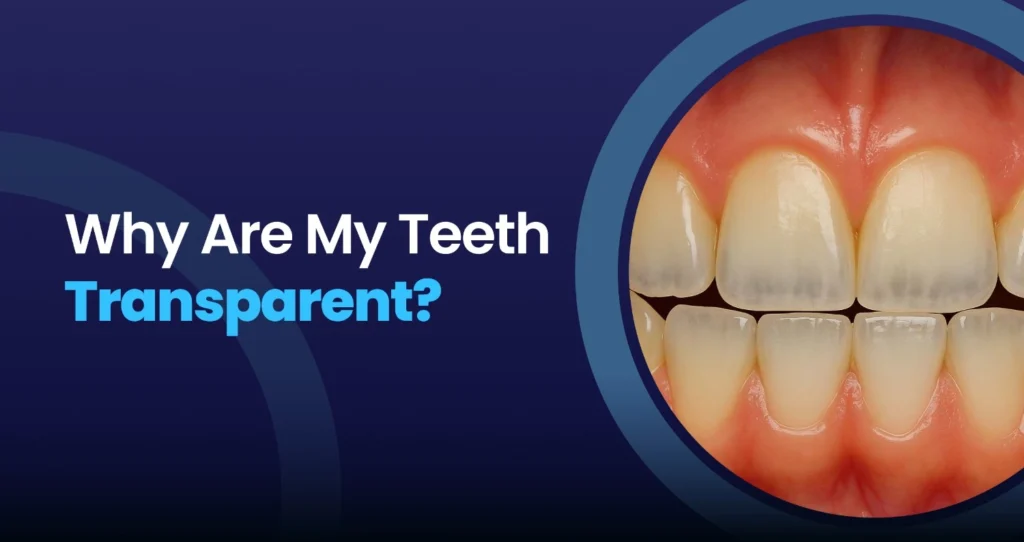
Have you ever looked in the mirror and noticed that the edges of your front teeth appear clear or almost glass-like?
It can be surprising, and for many people, it’s also a cause for concern. While slight translucency near the tips of teeth can be normal, increasing transparency may be a sign that your tooth enamel is wearing away.
If you’ve been wondering, why are my teeth transparent, you’re not alone. This is a common question dentists hear, especially from patients who are noticing changes in the appearance or sensitivity of their teeth.
In this guide, we’ll cover why teeth can look transparent, what causes enamel loss, symptoms to look out for, transparent teeth treatments, and how you can keep your teeth healthy.
What Does It Mean When Teeth Become Transparent?
Understanding Tooth Enamel
Enamel is the hard outer layer that covers teeth. It is the strongest substance in the human body and acts as a protective shield against bacteria, acids, and everyday wear from chewing.
Beneath the enamel is dentin, a softer layer that naturally has a yellowish color. When enamel becomes thinner, the dentin underneath begins to show through, changing the appearance of the tooth.
Unlike bones, enamel does not regenerate once it has been lost. While certain treatments can strengthen the remaining enamel, damaged enamel cannot naturally repair itself.
Why Transparency Occurs
If you’re asking yourself, why are my teeth transparent, the answer often comes down to enamel loss.
As enamel gradually wears away, the underlying dentin becomes more visible. The edges of the front teeth are usually affected first because they are naturally thinner than the rest of the tooth.
It’s helpful to know the difference between normal translucency and a possible problem. A little transparency at the edges can be normal. But if the clear areas get bigger or you notice sensitivity, chipping, or color changes, you should see your dentist.
Why Are My Teeth Transparent? Common Causes
1. Enamel Erosion
Enamel erosion is the leading cause of transparent teeth.
Every day, your teeth are exposed to acids from foods, beverages, and even your own stomach. Over time, repeated acid exposure slowly dissolves the minerals that make enamel strong.
As enamel becomes thinner, the teeth begin to appear more translucent.
2. Acidic Foods and Drinks
What you eat and drink can have a big effect on your enamel.
Foods and beverages that commonly contribute to enamel erosion include:
- Citrus fruits
- Soft drinks
- Sports drinks
- Energy drinks
- Wine
- Vinegar-based dressings and foods
Frequent exposure to acids weakens enamel, especially when acidic drinks are consumed throughout the day.
3. Acid Reflux and GERD
A lot of people don’t know that digestive issues can also affect your teeth.
Acid reflux and gastroesophageal reflux disease (GERD) allow stomach acid to travel into the mouth, where it repeatedly contacts the teeth.
Since stomach acid is very strong, frequent reflux can speed up enamel erosion and make your teeth look more transparent.
Other signs of acid reflux may include:
- Frequent heartburn
- Sour taste in the mouth
- Chronic sore throat
- Hoarseness
4. Teeth Grinding (Bruxism)
Grinding or clenching your teeth puts a lot of pressure on your enamel.
Many people grind their teeth while sleeping without realizing it. Over time, this constant friction can wear away the protective enamel layer.
Common signs include:
- Morning jaw pain
- Headaches
- Flattened teeth
- Chipped enamel
- Tooth sensitivity
5. Poor Oral Hygiene Habits
When practiced incorrectly, even healthy habits might turn harmful.
Enamel on the edges of teeth and close to the gumline can be worn down over time by brushing too aggressively or using a toothbrush with hard bristles.
Using a toothbrush with soft bristles and gentle circular motions can effectively clean teeth without causing undue abrasion.
6. Nutritional Deficiencies
Strong enamel depends on proper nutrition.
Low amounts of calcium and vitamin D may affect your body’s capacity to preserve strong teeth and bones.
Although nutritional deficiencies alone rarely cause transparent teeth, they can contribute to weaker enamel over time.
7. Genetic Conditions
In some cases, genetics play a role.
Conditions such as enamel hypoplasia and amelogenesis imperfecta affect the development of tooth enamel.
People with these inherited conditions may naturally have thinner or weaker enamel, making their teeth appear more transparent than normal.
Signs and Symptoms That May Accompany Transparent Teeth
Transparent teeth often develop alongside other noticeable changes.
Visual Changes
You may notice:
- Clear or glass-like edges on the front teeth
- Teeth appearing thinner than before
- Increased yellowing as dentin becomes more visible
- Loss of the bright white appearance
Physical Symptoms
As enamel wears away, many patients experience:
- Tooth sensitivity
- Discomfort when eating hot, cold, or sweet foods
- Mild pain while brushing
Structural Changes
Weakened enamel is more vulnerable to damage, including:
- Small chips
- Hairline cracks
- Flattened biting surfaces
- Increased tooth wear over time
Are Transparent Teeth a Dental Emergency?
Transparent teeth usually don’t require emergency dental treatment, but they should never be ignored.
When It’s Time to Schedule a Dental Visit
Book a dental appointment if you experience:
- Persistent tooth sensitivity
- Rapid changes in tooth appearance
- Pain while chewing
- Visible cracks or chips
- Teeth becoming increasingly transparent
Early diagnosis allows your dentist to identify the underlying cause before significant damage occurs.
Risks of Ignoring Transparent Teeth
Understanding the risks of ignoring transparent teeth is important because enamel loss does not stop on its own.
Without treatment, patients may experience:
- Continued enamel erosion
- Increased tooth sensitivity
- Cavities
- Tooth fractures
- Greater need for restorative treatment
Recognizing the risks of ignoring transparent teeth early on often leads to simpler, more conservative treatment options.
How Dentists Diagnose Transparent Teeth
Comprehensive Oral Examination
Your dentist will carefully examine your teeth, discuss your symptoms, and review your medical and dental history.
Questions about diet, brushing habits, teeth grinding, and acid reflux often help identify contributing factors.
Diagnostic Imaging
Dental X-rays may be recommended to evaluate the internal structure of your teeth and determine whether decay or other problems are contributing to enamel loss.
Identifying the Root Cause
A proper diagnosis focuses on more than just the appearance of the teeth.
Your dentist will assess lifestyle habits, dietary choices, existing medical conditions, medications, and other factors to determine why enamel loss is occurring.
Treatment Options for Transparent Teeth
The appropriate transparent teeth treatment depends on the severity of enamel loss and its underlying cause.
Fluoride Treatments
Professional fluoride treatments help strengthen the remaining enamel and reduce tooth sensitivity.
Although fluoride cannot replace lost enamel, it helps protect what remains.
Dental Bonding
One of the most common treatment options for transparent teeth is dental bonding.
A tooth-coloured composite resin is applied to improve appearance while providing additional protection for weakened enamel.
Porcelain Veneers
For patients concerned about aesthetics, porcelain veneers can restore the appearance of front teeth while covering areas affected by enamel loss.
Veneers also provide added durability when recommended by your dentist.
Dental Crowns
When enamel loss is extensive, dental crowns may be the most appropriate solution.
Crowns completely cover the tooth, restoring both function and protection.
Night Guards for Teeth Grinding
If grinding is contributing to enamel wear, a custom night guard helps protect your teeth while you sleep and reduces further damage.
Treating Underlying Medical Conditions
Successful treatment also involves addressing the underlying cause.
For example, managing acid reflux or improving dietary habits can help prevent additional enamel erosion and improve long-term results.
These treatment options for transparent teeth are often combined to provide the best outcome based on each patient’s needs.
How to Prevent Teeth from Becoming Transparent
Preventing enamel loss starts with healthy daily habits.
Reduce Acid Exposure
- Limit acidic foods and beverages.
- Rinse your mouth with water after consuming acidic drinks.
- Use a straw when appropriate.
Improve Oral Hygiene Habits
- Brush gently using a soft-bristled toothbrush.
- Choose a fluoride toothpaste recommended by your dentist.
- Avoid brushing immediately after consuming acidic foods or drinks.
Stay Hydrated
Drinking plenty of water helps maintain healthy saliva production, which naturally neutralizes acids and protects tooth enamel.
Wear a Mouthguard if You Grind Your Teeth
A professionally fitted night guard can significantly reduce enamel wear caused by grinding or clenching during sleep.
Maintain Regular Dental Checkups
Routine dental examinations allow dentists to identify enamel erosion in its early stages and recommend preventive care before more extensive treatment becomes necessary.
Conclusion
Transparent teeth are often an early sign that your enamel is becoming thinner. Whether the cause is acid erosion, teeth grinding, diet, genetics, or an underlying medical condition, early diagnosis is the best way to prevent further damage.
The sooner the cause is identified, the more treatment options are available to protect your teeth and preserve your natural smile.
If you’ve noticed changes in the appearance of your teeth or increased sensitivity, don’t wait for the problem to become worse.
Schedule a dental appointment with Gillmore Medical Dental today. Our experienced team in Maple, Ontario can evaluate your enamel, identify the underlying cause, and recommend personalized treatment to help you maintain a healthy, confident smile.
Frequently Asked Questions
Can transparent teeth become normal again?
Lost enamel cannot naturally grow back. However, dentists can strengthen the remaining enamel and improve the appearance of transparent teeth using treatments such as fluoride therapy, dental bonding, veneers, or crowns.
Does enamel erosion always cause transparent teeth?
No. Although enamel erosion is the most common cause, transparent teeth may also result from genetic conditions, teeth grinding, nutritional deficiencies, or certain medical conditions.
Can whitening treatments make transparent teeth worse?
In some cases, whitening products may increase sensitivity if enamel is already thin. It’s best to consult your dentist before using whitening treatments if you have transparent teeth.
How do dentists fix transparent teeth?
Treatment depends on the cause and severity. Options may include fluoride treatments, dental bonding, porcelain veneers, dental crowns, night guards, and addressing underlying medical conditions.
Can children develop transparent teeth?
Yes. Although less common, children can develop transparent teeth due to enamel development disorders, nutritional deficiencies, excessive acid exposure, or other dental conditions. A dental examination can help determine the underlying cause.