

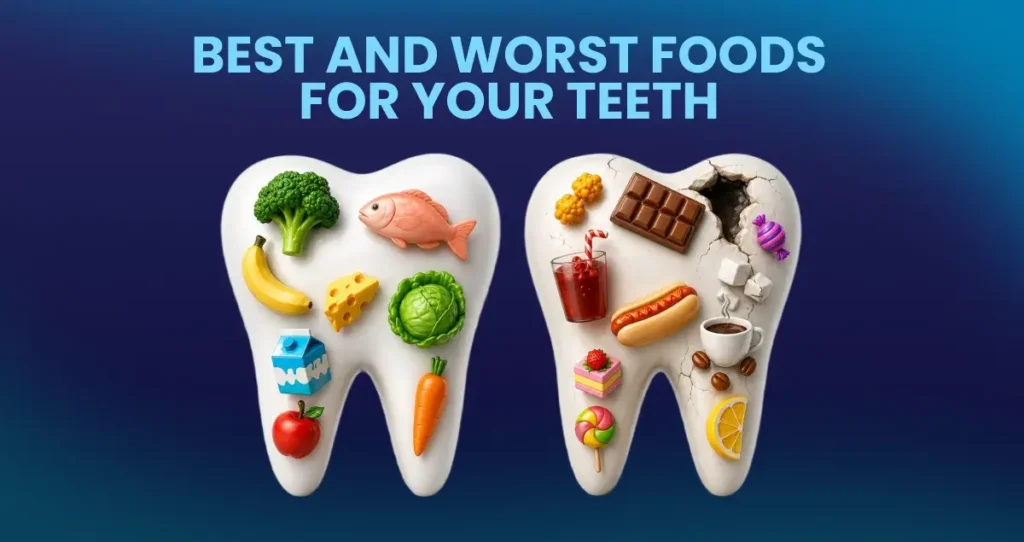
What you eat every day could be quietly damaging your teeth. From sugary drinks to crunchy snacks and sticky sweets, small habits can gradually weaken enamel and lead to cavities without obvious warning signs.
The truth is, your oral health is closely linked to your diet. While some foods strengthen and protect your teeth, others create the perfect environment for bacteria and acid to cause long-term damage.
In this guide, we’ll break down the best and worst foods for your teeth, why they matter, and what dentists recommend for maintaining a healthy, confident smile.
How Food Affects Your Teeth
Your mouth is responding each time you eat. Sugar and starch that remain on the teeth are food for bacteria in plaque. These foods cause acid as they break them down. That acid erodes the enamel of the teeth, which is the hard outer covering that covers your teeth.
Saliva is used to safeguard your mouth by sweeping away bits of food and acid. This is why water-rich and crunchy vegetables are usually preferable to your teeth since they are known to aid the flow of saliva.
Best Foods for Your Teeth
Enamel-Strengthening Foods
There are certain foods that provide your teeth with minerals that make them strong. Dairy products are one of the finest options as they contain a lot of calcium and phosphorus.
Cheese is particularly beneficial because it can help reduce the acid level in the mouth. Yogurt is also a good substitute as it has calcium and is typically less harmful to teeth, compared to sweet snacks.
Good choices include:
- Cheese
- Plain yogurt
- Milk
Such foods have the potential to sustain enamel and shield tooth structure in the long term.
Natural Cleaning Foods
There are also some crunchy fruits and vegetables that can help clean your teeth as you eat them. They do not replace brushing, but may aid oral health by enhancing saliva flow and helping remove small food particles.
One such example is the popular apples. Carrots and celery also come in handy, as their texture promotes chewing and saliva production.
Try adding:
- Apple slices
- Carrot sticks
- Celery
They are far healthier snacks than candy or chips.
Mineral-Rich Foods for Repair Support
Calcium is not enough to keep teeth healthy. Nuts, eggs, and fish contain vital nutrients that help maintain good teeth and gums.
Phosphorus and vitamin D, found in eggs and fish, contribute to the general health of teeth and could aid in enamel strength. Almonds and cashews are low in sugar and contain minerals.
Helpful foods include:
- Eggs
- Fish
- Almonds
- Cashews
They are easy, nutritious, and healthier than processed snacks.
Hydration-Friendly Foods
One of the best things to give your teeth is water. It aids in washing food bits away and aids saliva, which shields against acid.
Fruits and vegetables that contain a lot of water can also aid in treating dry mouth. Having the right amount of moisture in the mouth reduces the possibility of bacterial accumulation.
Pro-hydration foods and beverages include:
- Water
- Cucumber
- Watermelon
- Lettuce
Foods That Harm Your Teeth
Sugar-Heavy Foods
Some of the most widespread causes of cavities are sugary foods. Bacteria in the mouth are fed on candy, sweets, soda, and desserts that contain sugar. Tooth enamel becomes weak as such bacteria produce acid.
These are also amongst the worst foods that are bad for your teeth, as they are known to cause cavities at a very fast rate when consumed frequently.
Examples include:
- Hard candy
- Gummy candy
- Soda
- Sweet baked goods
Foods And Drinks Containing Acids
Even without much sugar, certain foods and beverages will harm teeth. Acid makes the teeth susceptible to wear and softens enamel.
The citrus fruits, energy drinks, vinegar foods, and sour drinks are also capable of causing erosion of the enamel when taken excessively. That is why dentists usually advise patients against the foods that damage tooth enamel.
Typical acidic options are:
- Lemons and oranges.
- Energy drinks.
- Sports drinks.
- Vinegar-based dressings.
Sticky Foods
Sticky foods are those that stick to the teeth. That is to say that sugar remains in contact with enamel longer, allowing bacteria more time to cause damage.
Caramel, toffees, and dried fruits are particularly troublesome as they may get stuck in grooves and in between teeth.
Examples include:
- Caramel
- Toffee
- Dried fruit
- Sticky fruit snacks
They are also unhealthy foods for your teeth, as the food is difficult to clear using saliva.
Refined Starches
Pure starches do not have a sweet flavor but dissolve into sugar in the mouth. Chips, white bread, and biscuits can cling to the teeth and provide food for plaque bacteria.
These are typical foods that harm enamel in the teeth when they are consumed frequently and in combination with poor brushing habits.
Examples include:
- Chips
- White bread
- Crackers
- Biscuits
Why These Foods Damage Teeth
There are two primary ways that foods harm teeth. To begin with, bacteria feed on sugar and starch and produce acid. Second, enamel can be worn down by acidic food and beverages.
This may eventually result in visible plaque formation, cavities, sensitivity, and enamel loss. Among the facts that one should keep in mind is the fact that once enamel is lost, it cannot grow again. This is why prevention is important.
Hidden Risks in Everyday Diet
Most individuals believe that candy is the only substance that has adverse effects on the teeth, but sugar is lurking everywhere. Acid exposure is enhanced by fruit juice, flavored coffee, sweet tea, sports drinks, and frequent snacking.
Late-night snacking is another hidden risk. If you go to bed without brushing, sugars and acids stay on your teeth for hours, giving bacteria more time to cause damage.
Dentist-Recommended Eating Habits
The following are simple habits that dentists recommend to reduce the risk of decay:
- Have sweet foods with meals rather than snacking on them throughout the day.
- Consume more water than sweet drinks.
- Wash your mouth after sour foods.
- Restrict sugary snacks and beverages.
- Select a healthy diet and foods rich in calcium.
These minor modifications can have a significant difference in the long run.
Expert Insight from Gillmore Medical Dental
Gillmore Medical Dental emphasizes prevention as the foundation of long-term oral health. Healthy eating habits and proper daily oral care work together to keep your teeth strong and resilient. Ignoring early warning signs like sensitivity or enamel wear can lead to more serious concerns over time.
Routine dental visits help catch issues early and keep your smile in top condition. Learn more by exploring the dentistry service page at Gillmore Medical Dental.
Wrap Up
Your daily food choices play a major role in the long-term health of your teeth. While enamel-strengthening foods like dairy, nuts, and fresh vegetables help protect your smile, sugary, acidic, and sticky foods can gradually lead to decay and enamel damage if not managed properly. Making mindful dietary choices, along with good oral hygiene, is essential for maintaining strong teeth and a healthy mouth.
At Gillmore Medical Dental, we focus on prevention and patient education to support lifelong oral health. This guide on the best and worst foods for your teeth is also designed to help you make smarter choices for a healthier smile.
If you’re experiencing sensitivity, enamel wear, or simply want a professional checkup, our dental team is here to help.
Schedule your dental visit today and take the first step toward stronger, healthier teeth.
FAQs
Which foods are the most effective in strengthening your teeth?
The best options that can help in maintaining strong teeth are cheese, yogurt, milk, eggs, fish, nuts, and crunchy vegetables.
Which foods are the most harmful to tooth enamel?
Some of the worst to enamel include energy drinks, soda, tart candy, citrus beverages, and sticky sugary sweets.
Can enamel damage be reversed?
No, enamel damage cannot be fully reversed because enamel does not regenerate. However, early-stage damage can be managed and strengthened through proper oral care, fluoride treatments, and a healthy diet.
Is fruit bad for teeth’s health?
Fruit is generally good for your teeth, especially when eaten whole. However, fruit juices, highly acidic fruits, and dried fruits should be consumed in moderation, as they can contribute to enamel erosion and tooth decay.
How often should I visit a dentist?
Most people should visit a dentist every six months for routine checkups and cleanings, although some may need more frequent visits depending on their oral health.